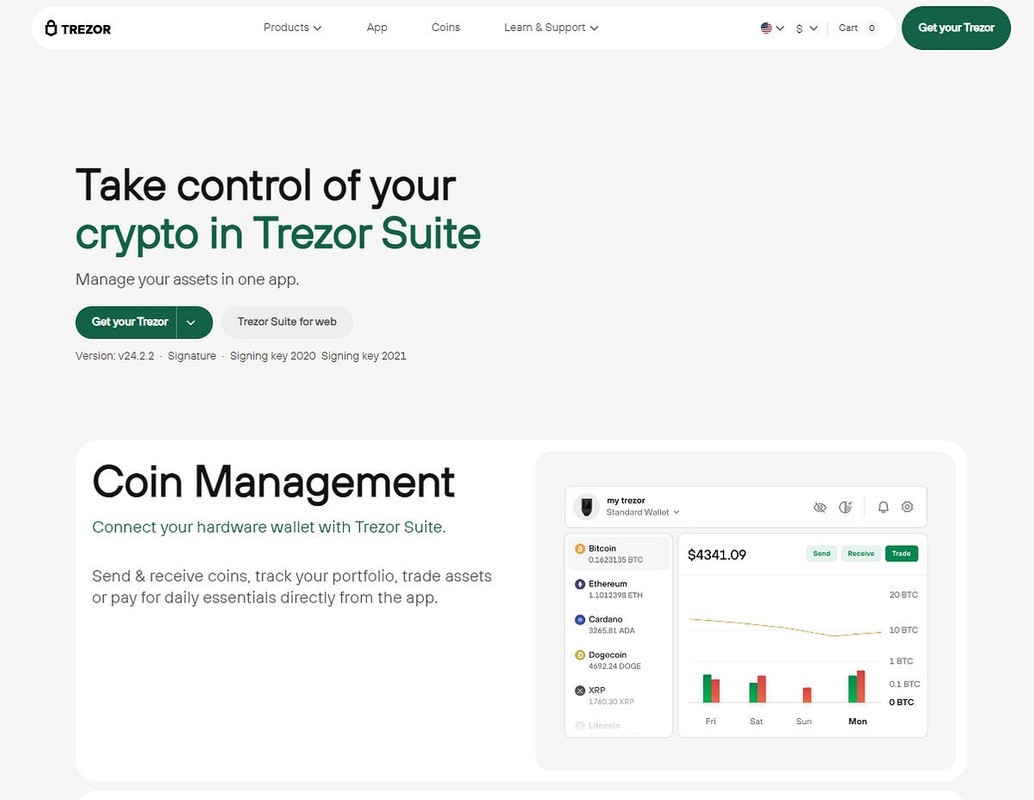
Trezor Login — The Smartest Way to Access Crypto Safely
Logging into a crypto wallet shouldn’t feel like playing with fire. Unfortunately, many investors still rely on centralized exchanges and software wallets that depend on passwords, servers and cloud databases — all of which can be compromised.
Trezor login changes that reality. Instead of trusting platforms to safeguard your wealth, Trezor gives you the power to approve access through a physical hardware device that keeps your private keys offline.
Whether you own Bitcoin, Ethereum, stablecoins or altcoins, understanding how the Trezor login system works is one of the most valuable steps you can take toward crypto security.
What Makes the Trezor Login System So Different?
Most login systems revolve around usernames and passwords. It doesn’t matter how strong the password is — if the database gets hacked, your access can be stolen.
Trezor flips the whole model. With Trezor, there is:
No online storage of your private keys
No password stored on a server
No way to access your wallet without the physical device
Even if someone knows your computer login, email, exchange password or two-factor code, they still cannot get into your Trezor wallet without the device itself.
In short: Trezor login removes the weakest link — the internet — from the login process.
How the Trezor Login Process Works — Step by Step
Many new users expect Trezor to operate like a software wallet, but it’s much safer and surprisingly easy. Here is the basic workflow:
Connect your Trezor hardware wallet to your computer or smartphone.
Open Trezor Suite or a third-party platform that supports Trezor.
Click the login or access wallet button.
Trezor asks you to confirm on the device — not on your computer.
Enter your PIN using the randomized pad shown on the device screen.
Approve login by pressing the physical buttons on the Trezor device.
Only after these physical approvals does the platform unlock access to your portfolio — balances, transactions, tokens and tools.
The Three Pillars of Trezor Login Security
Trezor’s reputation is built not on convenience first, but security first. Three essential components work together:
1. Offline private keys
The private keys never leave the Trezor device. Apps simply “request” authorization, but the device performs the signing internally and sends back approval — not the keys themselves.
2. PIN protection
Even if someone gets hold of the physical device, they can’t log in without your PIN. And after every incorrect attempt, the waiting time increases dramatically, preventing brute-force cracking.
3. Recovery seed phrase
If the device is ever lost or damaged, your wallet can be recovered using your seed phrase.
This phrase must be stored offline — ideally on paper or a steel backup, not in phones, screenshots or cloud storage.
Together, these three features make unauthorized access nearly impossible.
Why the Crypto Community Values the Trezor Login System
Crypto users choose Trezor login not only for protection but for financial independence. A hardware wallet means:
No relying on an exchange to “hold” your money
No asking customer support to access your account
No fear of frozen withdrawals
No dependence on centralized authority
Trezor login is proof that a user can be their own bank — safely, without unnecessary risk.
How Secure Is a Trezor Login Compared to an Exchange Login?
Let’s break down the difference:
Security ComponentTrezor LoginExchange LoginOwnership of private keysControlled by youControlled by the companyAttack surfaceOffline, device-onlyOnline database and cloudRequired for loginPhysical device + PINUsername, password and possibly 2FAVulnerable to cloud hacksNoYesPhishing riskExtremely lowHigh
The reason Trezor login continues to grow in popularity is simple: your access cannot be faked, copied or stolen remotely.
Common Trezor Login Problems and How to Fix Them Quickly
Even though the login system is robust, users sometimes face challenges. Here are easy solutions:
Login IssueSolutionDevice not recognizedTry a different USB port or cable, restart Trezor SuitePIN confusionLook closely at the number grid on the device screen — numbers change position every timeIncorrect PIN attemptsWait for the timer and try again calmly; forced resets prevent easy brute forceBrowser login blockedClear cache or switch to a supported browserTrezor Suite not openingReinstall or update to the latest version
These issues are usually minor, and once resolved, access becomes smooth and reliable.
Best Practices for Safe Trezor Login
To get maximum protection from your hardware wallet, follow these essential rules:
Never type your recovery phrase into any website or computer
Never save the seed phrase as a photo or screenshot
Never share your PIN number with anyone
Keep your device in a secure place when not in use
Only download Trezor Suite from the official website
Check the screen of your Trezor device every time before confirming a login or transaction
If you want maximum protection, consider turning on the optional passphrase feature — an advanced method that creates a hidden wallet accessible only with a passphrase that you choose.
Frequently Asked Questions About Trezor Login
Can someone hack my Trezor login remotely?
No. Hackers can’t log in because access must be approved physically on the device.
If someone steals my Trezor device, can they log in?
Not without your PIN and your seed phrase. The device alone is not enough.
Does Trezor need internet to log in?
The computer needs internet. The Trezor device stays offline at all times and never sends your private keys online.
Is Trezor login the same as logging into a blockchain?
Not exactly. Blockchains don’t have login systems. Trezor safely unlocks the authority to control your blockchain addresses.
What happens if I lose my Trezor device?
Your crypto remains safe. You simply restore your wallet on a new Trezor using your seed phrase.
Final Thoughts — Trezor Login Is About Control, Not Convenience
Anyone can open an exchange account in seconds, but control of your crypto disappears the moment you trust a third party with your keys. Trezor login takes a little more effort — connecting the device, entering a PIN, verifying actions — but that effort is why your money stays safe.
The world of crypto is full of risks: phishing websites, exchange collapses, database breaches, SIM-swaps and malware. But Trezor proves that with physical verification and offline key storage, a hacker cannot unlock what they cannot reach.
Whether you're storing long-term investments, participating in DeFi, or simply learning how to manage a digital portfolio, Trezor login gives you something priceless: